
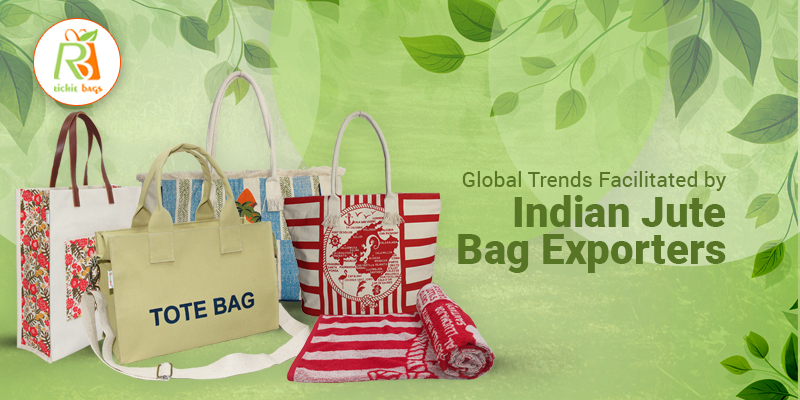
Jute is one of the primary raw materials to facilitate sustainable packaging options in diverse industries. Being a biodegradable, natural fabric available in abundance, the golden fibre has emerged as one of the most eco-friendly alternatives to plastic and other synthetic materials.
The rising demand for sustainable packaging scopes across industries worldwide has brought jute bags into the limelight. Indian jute bag exporters like Richie Bags take pride in playing a pivotal role in facilitating this shift while contributing significantly to both environmental and socioeconomic changes.
We have newly included a wide range of commodity packaging products in our catalogue, including brown jute gunny sacks, hessian bags, and sack bags for domestic and international supplies. This article discusses the vital role that jute bags play in making sustainable packaging innovations a reality and how we are making a difference at Richie Bags to supply the demand.
Jute Packaging Made Mandatory in India and Bangladesh
In India, the Jute Packaging Materials (Compulsory Use in Packing Commodities) Act, 1987, sets the rule that 100% of foodgrains and at least 20% of sugar must be packaged in jute bags. In this context, jute bags mainly mean gunny sacks, but there are different variations of it, including jute sack bags and branded bags.
As the Indian Government spends hefty amounts of approximately Rs. 12,000 crore every year, it ensures a stable market for the farmers and labourers who work towards jute cultivation and production. The promotion of jute-based packaging in India and neighbouring countries, like Bangladesh and Nepal, not only supports the Indian domestic jute industry but also inspires other industries and governments to adopt the actionable possibilities of sustainable commodity packaging.
The Indian jute industry thrives as a global leader in jute exports. As leading jute bag exporters in India, we at Richie Bags plan to introduce more innovative ideas for sustainable packaging, reaching out to specific industrial niches with tailored solutions of eco-friendly alternatives to plastic packaging.
Practical Features of Jute Bags That Make Them Ideal for Sustainable Packaging
The typical features of jute as a raw material have been widely explored. Strength, biodegradability, durability, and versatility—these are the core features that make jute a practical choice for sustainable packaging. As a prominent jute bag manufacturer in India, we understand that there is more to it. Jute is called the “golden fibre” not because it has the semblance of it but because it also symbolises golden opportunities. Below are some points to note:
- Vocal for Local: NITI Aayog launched the Vocal for Local initiative to promote grassroots entrepreneurship and self-reliance. The scheme emphasises empowering domestic artisans, farmers, and labourers, which also includes jute farmers and workers. So, choosing jute packaging directly impacts the socioeconomic fabric as well as the cultural aspects of local craftsmanship.
- Renewable Natural Resources: Jute fibres are cultivated from the step and ribbon of the jute plant. The plant is not felled. Hence, deforestation is out of the equation. The fibre, which is abundantly available in India, Bihar, and Assam, gives a lot and takes so little. Moreover, we are a sustainability-focused jute bag manufacturer in India to have adopted a range of state-of-the-art production methods to further reduce water consumption, contamination and other industrial impacts of jute production.
- Branding Opportunities: Jute has long been used in the production of gunny sacks for transporting goods such as grains, sugar, and fertilizers. However, in recent years, its potential has expanded far beyond this traditional scope. Today, jute is being repurposed for a wide range of sustainable packaging solutions, including shopping bags, product wraps, and even luxury packaging for high-end goods. This shift is driven by a growing global awareness of the environmental impact of plastic, as well as an increasing preference for sustainable and biodegradable materials.
Jute Bags: Looking Beyond the Gunny Sack Scope
While jute has long been associated with the production of gunny sacks for bulk storage and transportation, today, it is being used in a wide variety of innovative applications. In the realm of packaging, jute bags have evolved to serve more sophisticated purposes, from retail shopping bags to packaging for luxury items like wine, cosmetics, and electronics. The aesthetic appeal of jute, combined with its eco-friendly attributes, makes it an ideal choice for businesses looking to market their products as environmentally responsible.
At Richie Bags, we are continuously striving to expand the possibilities for jute bags. With our established expertise as sustainability-focused jute bag manufacturers in India exporting globally, we are poised to remain key players in the global transition to sustainable packaging. Our capabilities to provide high-quality, eco-friendly alternatives to plastic have high potential to shape an eco-conscious market and set new benchmarks for future industries.